
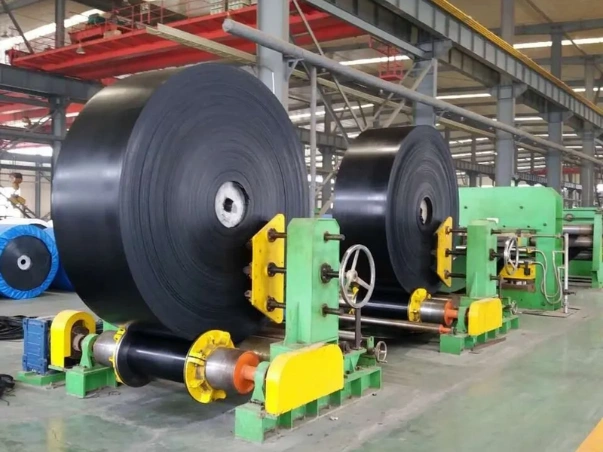
From mines to machines, rubber belt conveyors keep industries moving forward
Have you ever wondered how industries move tons of materials from one place to another easily? From dusty mines to busy manufacturing floors, rubber belt conveyors make this possible every single day. These systems are the silent movers behind smooth production, steady transport, and efficient handling.
In the factories, ports, warehouses, and even in the power plants, the conveyors save time, decrease labor, and increase productivity. Using creativity and accuracy, reliable rubber belt conveyor manufacturers offer high-performance systems that are constructed to meet the needs of contemporary industries.
In the mining industry, the conveyors of rubber belts are widely used to transport coal, ores, and minerals over long distances. They guarantee an uninterrupted flow of extraction areas to processing facilities and minimize manual operations and enhance safety. Systems that are available in the market by major manufacturers of rubber belt conveyors are made to be durable and heavy-duty; thus, they can easily survive the harsh mining conditions.
Rubber belt conveyors are also important in the cement production process to transfer raw materials such as limestone, clay, and clinker to various stages in the process. They assist in sustaining a smooth-running flow that is efficient and results in increased speed of production and less downtime. They offer dust systems capable of dealing with the high temperature, dust, and load requirements typical in cement plants, which makes the operations run smoothly and reliably.
In power generation units, rubber belt conveyors play a crucial role in handling bulk materials such as coal and ash. They are effective in the transportation of coal to storage locations and to boilers, and the transportation of waste products to be disposed of or recycled. Systems provided by leading rubber belt conveyor are able to operate round-the-clock and work safely in harsh environments, which means that the supply of fuel does not decrease, and the processes take place in the plant without disturbance.
Rubber belt conveyors in the construction industry make the handling of materials quick and easy. They are extensively utilized to transport sand, gravel, cement, and other construction materials effectively on sites. These conveyors will assist in lessening the manual efforts, reducing the material wastage, and enhancing the productivity of the worksite. By using durable and tailor-made structures of trusted rubber belt conveyors, construction firms can handle a large amount of volume and deliver projects on schedule.
In manufacturing units, rubber belt conveyors play a key role in maintaining a smooth production flow. They are employed to move raw materials, semi-finished products, and finished products across the various stages of the process. This minimizes paperwork, streamlines production, and guarantees output at the right time to assist industries in making more output and producing consistent output./p>
The food processing industry also relies on rubber belt conveyors as a way of transporting products for hygienic and efficient movement of goods. These conveyors also deal with raw products or packaged products and ensure their safety and cleanliness. This makes them run smoothly, a factor that facilitates the process of sorting, checking, and wrapping goods in a safe and fast manner.
In chemical and fertilizer plants, rubber belt conveyors are used to safely transport powders, granules, and raw materials. When working with corrosive or reactive materials, they contain the spillages and contamination. These conveyors are designed to work in tough conditions to deliver a continuous supply of materials and facilitate better safety and productivity in the workplace.
Rubber belt conveyors are required in the logistics and warehousing systems to move materials fast and efficiently. They assist in sorting, packaging, loading, and offloading products, eliminating manual work and time wastage. These conveyors enhance space use, enhance rapidity in dispatching, and ensure a coherent flow of materials by ensuring a constant flow of materials in the storage and distribution locations.
At ports and shipping yards, rubber belt conveyors play a major role in handling bulk materials like coal, grains, cement, and fertilizers. They are meant for both loading and unloading ships, which makes the transfer of cargo a smooth process. These conveyors allow cutting the turnaround time down, reducing spillage, and safety standards are preserved even in the course of heavy-duty work.
Rubber belt conveyors, which are very common in the automotive industry, are applied in assembly lines to transport the parts of the vehicle through various manufacturing processes. They facilitate accurate and continuous travelling of components—engines, doors, finished cars—and the flow of work remains uninterrupted, and the production rate is enhanced. They are an invaluable component of the contemporary automotive production systems because of their reliability and flexibility.
For businesses seeking reliable and high-performance conveyor solutions, partnering with experienced rubber belt conveyor manufacturers ensures top-quality systems built to enhance productivity, safety, and long-term performance.


